Seed Phrase vs. Private Key: The Difference and How to Stay Safe
A private key controls one address; a seed phrase regenerates every key in your wallet. Here is how they differ and six rules for protecting both.
Published October 14, 2025 · Updated September 3, 2026 · 2 min read
Securing your digital assets is non-negotiable. Two fundamental components of crypto wallet security are the seed phrase and the private key. They are often confused, but they serve distinct purposes, and anyone who gains access to either can take full control of your wallet and drain it. Here is what sets them apart and how to protect them.
What is a private key?
A private key is a randomly generated string of characters that acts as the secret code to access and manage a specific wallet address. It is the key to a single digital safe: it lets you sign transactions and prove ownership of the funds tied to that address. An Ethereum private key is a 64-character hex string; a Solana private key is a long base58 string. If someone knows your private key, they control the funds at that specific address.
What is a seed phrase?
A seed phrase (also called a recovery phrase or mnemonic) is a set of 12, 18, or 24 words generated when you create a wallet. It is a human-readable backup that can regenerate all the private keys associated with your wallet. If your device breaks or you forget your password, the seed phrase restores your wallet and all its addresses on a new device. The flip side: anyone with your seed phrase controls every address derived from it, not just one.
Key differences
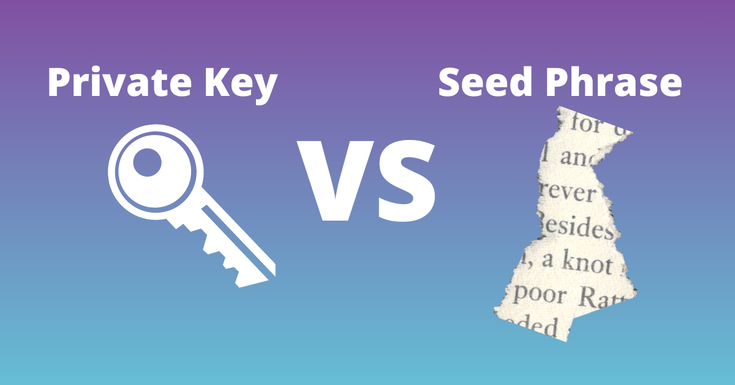
- Scope. A private key is tied to a single address. The seed phrase is the master key that regenerates every private key in the wallet. Losing a private key compromises one address; losing your seed phrase risks everything.
- Format. Private keys are long alphanumeric strings that are hard to transcribe. Seed phrases are word lists designed to be written down.
- Use. Private keys sign transactions directly. Seed phrases are for recovery when you lose access or switch devices.
- Risk. A stolen private key exposes one address. A stolen seed phrase exposes the whole wallet.
Why it matters
There is no central authority in crypto to reverse a transaction. A private key compromise means one address can be drained; a seed phrase compromise can wipe out an entire portfolio. Protecting both is your responsibility.
Safety rules
- Never share. Not with apps, websites, or anyone claiming to be support. Scammers pose as trusted entities to extract these details.
- Store offline. Write them on paper or engrave them on metal, and keep them somewhere physically secure.
- Avoid digital storage. No phones, computers, screenshots, or cloud drives.
- Use a hardware wallet. Devices like Ledger or Trezor keep keys offline.
- Test recovery. After setup, restore the wallet from the seed phrase once to confirm you recorded it correctly.
- Keep multiple backups in separate secure locations to protect against fire, theft, or damage.
Summary
A private key is direct access to one address; a seed phrase is the master key to your entire wallet. Understand the difference, store both offline, and you have removed the most common way people lose crypto.
Swap across 10+ chains in one transaction
Non-custodial, no signup, every fee shown before you sign.
Open Quack Swap